Why Niche Brands Can't Find the Right Creators
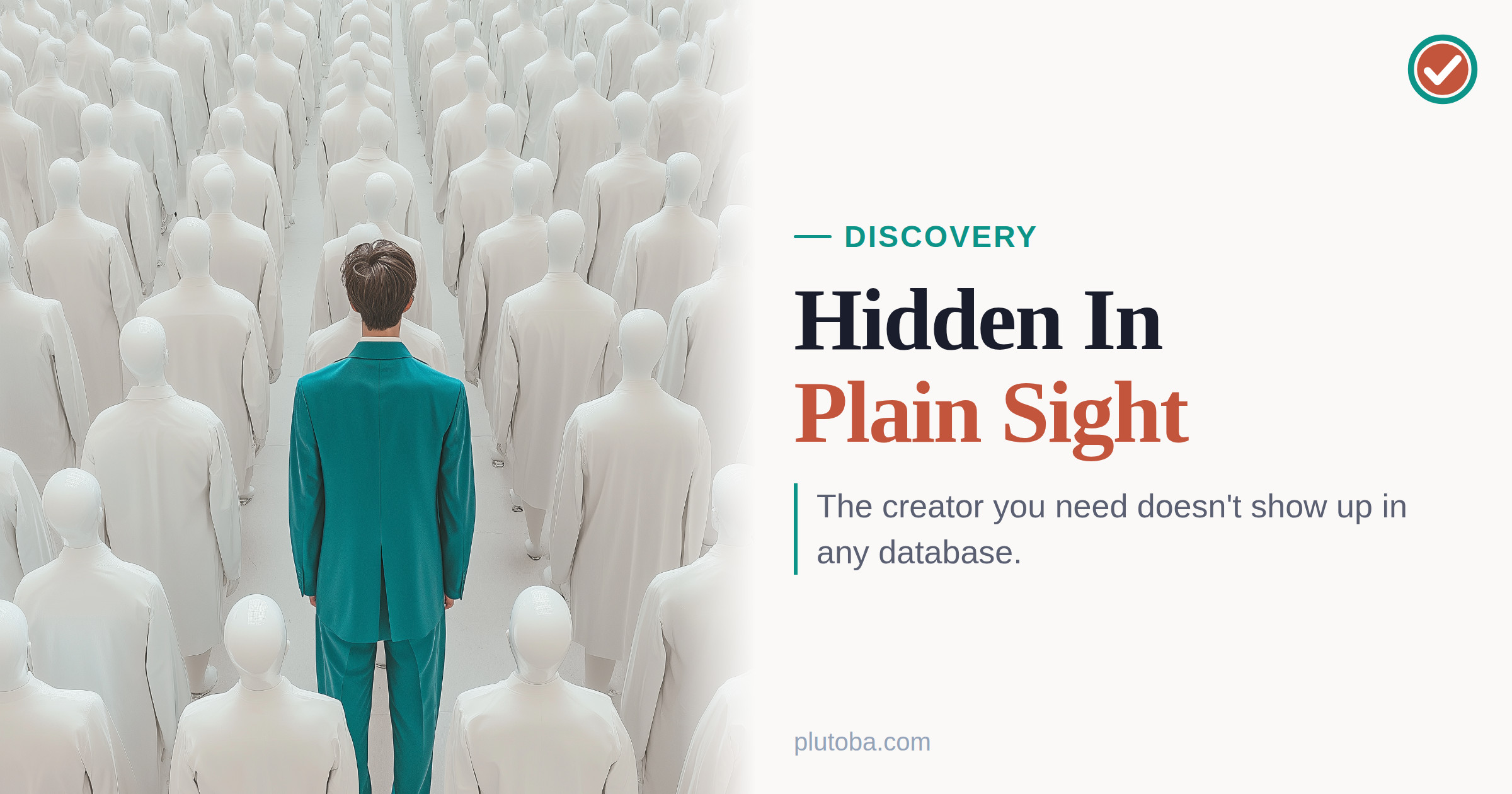
A supplement brand founder about to launch in 10 weeks posted a simple question on Reddit: "What's the best way to get creators and influencers for fitness?" They added, almost apologetically, "I'm horrible with social media, so navigating this is one of my top priorities."
That post didn't go viral. It didn't need to. It captured something we see over and over again in influencer marketing communities: brands with real budgets and real products, stuck at the very first step.
Based on discussions across r/influencermarketing, r/InstagramMarketing, r/ecommerce, and r/TikTokMarketing during January-February 2026.
The discovery problem nobody talks about
The influencer marketing industry is worth over $30 billion. There are dozens of creator discovery platforms. And yet, brand after brand is still posting on Reddit asking the same basic question: where do I find the right creators for my niche?
The problem isn't a lack of creators. It's that the tools designed to find them don't work well for anyone outside mainstream lifestyle categories.
The algorithm works against you
A junior marketer starting at a K-beauty brand described the challenge with striking clarity: "How do you find the right micro-creators on TikTok, since the algorithm mainly pushes viral content? Hashtags and search results always seem to surface bigger creators."
This is the core tension. TikTok's discovery is optimised for viewers, not for brands looking to partner. Search for "skincare" and you'll find creators with millions of followers. Search for "K-beauty micro-creators targeting the US market" and you'll find nothing useful. The brand's entire setup was Google Sheets for tracking and Mailmeteor for outreach. That was the whole stack for a company actively running seeding campaigns.
The same marketer asked a question that should worry every platform in the space: "My CEO is asking whether we can use AI for influencer seeding. How are you using AI in your influencer workflows today?" The fact that the question was asked on Reddit, not answered by the tools they were already paying for, says everything.
When "lifestyle" isn't your niche
The discovery problem gets worse the more specialised your product is.
A founder building a Mac productivity app for people with ADHD posted looking for YouTube micro-influencers with 10K-100K subscribers in very specific niches: "ADHD, productivity, Mac apps, study with me, dev setups." They even offered to hire someone just to do the finding: "I need 5-10 influencers ready to collaborate. You find channels, do outreach, negotiate terms."
That's a brand willing to pay twice - once for the creator, and once for someone to locate them.
A B2B SaaS company was looking for micro-influencers in "sales, growth, RevOps, or founder education." Their approach? Posting on Reddit and asking people to comment with their platform and niche. No discovery tool. No database. Just a public call for help.
Three different verticals, three different budgets, all ending up in the same place: Reddit. And once they find creators, the outreach challenge is a whole separate problem.
The "hours manually searching" problem
One marketing manager running small-to-medium campaigns for growing brands on Instagram laid out what they actually needed: "A platform that works well for discovering creators in specific niches without spending hours manually searching."
That's not an unreasonable ask. But it's the one thing most platforms still can't deliver. The generic approach - type in a keyword, filter by follower count, scroll through profiles - breaks down when your niche has specific terminology, overlapping audiences, or creators who don't neatly fit into pre-built categories.
Another marketer put it more directly: "Where do you even find good creators without paying for tools?" They'd been doing manual influencer research for brands and agencies for years, and kept seeing the same question surface repeatedly. The fact that they offered to do it for free, just to practise, tells you how underserved this need is.
Why existing tools fall short
The tools that do exist tend to optimise for volume, not precision.
One brand owner who tested multiple platforms shared a telling comparison. Their discovery needs were specific - sustainable home goods - and generic "lifestyle" creators didn't convert. The platforms that offered broad databases failed them at the moment that mattered most: finding someone whose audience actually cared about their product category.
The issue isn't that these platforms are bad. It's that they were built for a version of influencer marketing where categories were broad and audiences were general. The deeper problem is that discovery tools filter for numbers, not creator fit - and no amount of demographic sliders can solve that. Fashion. Beauty. Food. Fitness. But the market has fragmented. A "fitness" creator who does bodybuilding content won't work for a supplement brand targeting endurance athletes. A "beauty" creator who does makeup tutorials won't work for a K-beauty skincare brand targeting the US market.
The pricing gap compounds the problem
Even when brands find a platform with decent discovery, pricing creates another barrier. One brand owner described spending a week looking at CRM tools and finding everything either too expensive or too basic: "Is everyone just using massive spreadsheets? Or is there a tool out there that's actually built for SMBs?"
For niche brands, this gap is especially painful. They don't need to manage hundreds of creator relationships. They need to find 5-10 perfect-fit creators in a narrow category. Paying $500+ per month for enterprise tooling to find a handful of partnerships doesn't make financial sense, but the free alternatives don't have the filtering depth to surface niche creators. And without reliable pricing benchmarks, brands can't even tell if the creators they find are quoting fair rates.
What's actually working
Despite the challenges, some patterns emerged from brands that are making progress.
Commission-based models as discovery filters
An interesting pattern: some brands are using performance-based structures not just as a payment model, but as a discovery mechanism. By offering commission-based partnerships, they attract creators who are genuinely confident in their ability to convert, which naturally filters for audience quality and niche relevance.
One travel business in Tokyo offered 15-20% commission on bookings plus bonuses for early participation and creator referrals. The structure itself acted as a filter - only creators with engaged, travel-interested audiences would see the economics as worthwhile.
This is the most underrated approach in the thread. Instead of searching for the right creators, you set up the incentive structure that makes the right creators come to you.
Start with your competitors' creators
Several experienced marketers recommended reverse-engineering competitor partnerships. Instead of searching for creators by category, look at which creators are already producing sponsored content in your space. One agency owner described their approach: tracking "which creators repeatedly show up in top-performing brand collabs" and "which formats actually convert, not just views."
This works because it sidesteps the discovery problem entirely. You're not asking a database to understand your niche. You're looking at proof of concept.
Use platform-native search strategically
The K-beauty marketer's observation about TikTok surfacing big creators is real, but it's not the whole story. Several brands reported success using platform-specific search techniques: looking at who's commenting on competitor content, checking tagged posts on smaller brand accounts, and exploring niche hashtags that are too specific for most creators to game.
The key insight: the best niche creators often don't optimise for discoverability. They're building audiences around genuine expertise, not chasing algorithmic trends. Finding them requires more human judgement than any automated filter currently provides.
Build relationships before you need them
The protein bar company with 43k Instagram followers and $5-10k per month in ad budget captured a common dilemma: "I like the idea of the TikTok creator marketplace but not sure how much that moves the needle." They had viral posts but couldn't convert attention into reliable creator partnerships.
The brands getting this right are building creator relationships before campaign season. Engaging with niche content, supporting creators with genuine interest, and creating a pipeline of potential partners rather than scrambling to find someone when the brief lands.
Key takeaways
- Commission-based structures double as discovery filters. Performance-based models naturally attract creators with relevant, engaged audiences - instead of searching for the right creators, let the incentive structure bring them to you.
- Generic discovery databases don't work for niche brands. If your product doesn't fit neatly into "beauty" or "fitness," you'll spend more time filtering out bad matches than finding good ones.
- TikTok's algorithm optimises for viewers, not brand partners. Manual research and competitor analysis still outperform automated search for specialised categories.
- The best niche creators don't optimise for discoverability. They're building audiences around expertise, not chasing trends, which means they're invisible to most platforms.
- Reddit has become a de facto hiring board for niche brands. When the tools fail, brands go where creators gather. That's telling.
- Start with 5-10 perfect-fit creators, not 50 generic ones. Niche brands convert better with fewer, more aligned partnerships than with broad campaigns.
Finding niche creators is hard enough. PlutoBa makes sure the ones you find are worth the budget - with AI risk scoring, fake follower detection, and rate benchmarking before you commit. Vet your next creator →