AI Content Burnout: Why Audiences Penalise Fake Sponsored Posts
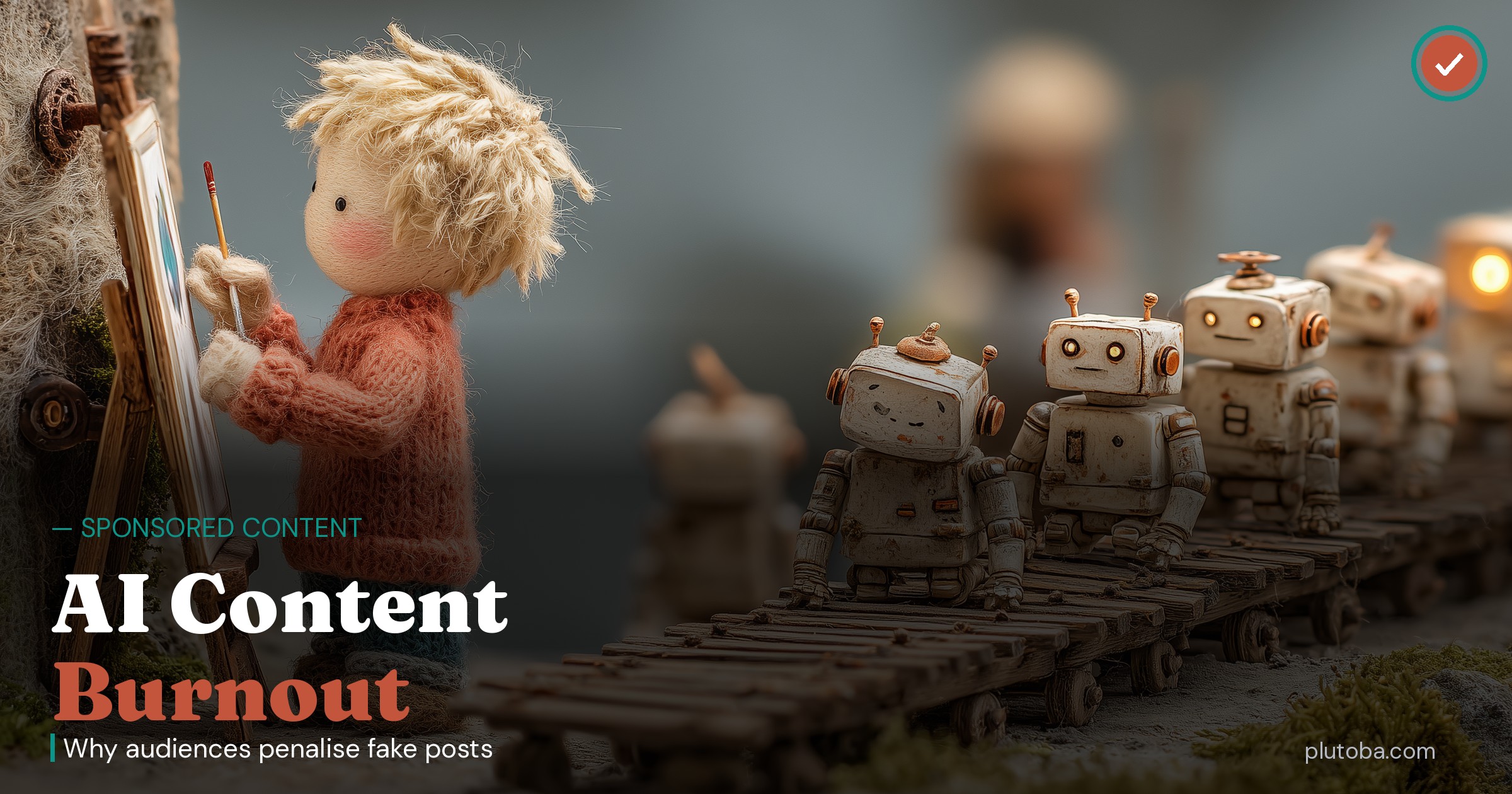
Your feed is 90% flawless, high-definition, and completely soulless. That's not a hot take - it's the reality that marketers, creators, and audiences are all describing independently across every major platform in 2026.
Consumer enthusiasm for AI-generated creator content has collapsed from 60% in 2023 to just 26% in 2025, according to a Billion Dollar Boy study of 4,000 consumers. A growing share of UK and US consumers now say AI is negatively disrupting the creator economy. The content got better. The results got worse.
Inspired by discussions across r/SocialMediaMarketing, r/influencermarketing, r/InstagramMarketing, and r/UGCCreators.
The Uncanny Valley of Sponsored Content
AI tools have made it trivially easy to produce polished sponsored content at scale. Perfect lighting, clean edits, well-structured scripts - all generated or assisted by AI in a fraction of the time it used to take. The problem is that audiences have learned to recognise the pattern.
The telltale signs aren't technical flaws. They're the absence of human ones. No stumbled words, no slightly off framing, no moments where the creator genuinely reacts to the product rather than performing a reaction. When every sponsored post looks like it came off the same assembly line, followers develop a reflex: scroll past.
One agency marketer on Reddit described automating their entire content pipeline and watching efficiency climb 40% while engagement tanked. The content was technically superior. The audience didn't care.
Why "Better" Content Performs Worse
This seems counterintuitive until you understand what audiences are actually optimising for. They're not looking for production quality. They're looking for trust signals.
The pattern shows up across multiple studies. A 2024 Stackla survey found consumers are 2.4 times more likely to view user-generated content as authentic compared to brand-created content. Unscripted formats consistently outperform polished branded content on both engagement and conversion. The gap between what brands think looks good and what audiences actually engage with has never been wider.
This connects directly to why sponsored content underperforms organic posts from the same creators. AI assistance widens that gap further. When the sponsored post is visibly more polished than the creator's organic content, it signals inauthenticity before the viewer even processes the #ad label.
The Audience Punishment Mechanism
Audiences don't just ignore AI-polished sponsored content. They actively penalise it through three mechanisms that compound over time.
Engagement withdrawal. Followers stop liking, commenting, and sharing. The algorithm reads this as a quality signal and reduces distribution. The creator's next post - even an organic one - reaches fewer people because the account's overall engagement velocity has dropped.
Trust erosion. When a creator's sponsored posts feel manufactured, followers start questioning the organic content too. The scepticism bleeds across the entire feed. This is the same dynamic behind the metrics brands stopped trusting - a blended engagement rate that masks the gap between organic and sponsored performance.
Audience sorting. The most valuable followers - the ones who actually buy things based on creator recommendations - are also the most sensitive to inauthenticity. They leave first. What remains is a larger but less commercially valuable audience. The creator's follower count holds steady while conversion rates quietly collapse.
The Creator Who Got Dropped - and Won
We covered one striking example in detail in our post on creator brand safety risk: a creator was dropped by a skincare brand for posting an honest review that included criticism. The brand expected a scripted endorsement. The creator gave a genuine take.
The audience rewarded the honesty with ten times the normal view count. Other brands reached out specifically because of the authentic approach. The creator's career improved. The brand's reputation didn't.
This is the new selection pressure. Audiences are actively rewarding creators who resist the temptation to polish everything into sameness, and punishing those who don't.
What This Means for DTC Brands Spending $5K-$20K/Month
If you're running 3-10 creator partnerships, AI content burnout affects you in two specific ways.
Your vetting process needs to account for AI reliance. A creator whose recent sponsored posts all have the same polished, templated feel is a risk, regardless of their follower count or historical engagement rate. Look at the texture of their content. Does the sponsored work sound like them, or does it sound like every other sponsored post on the platform? A solid creator vetting checklist now needs to include content authenticity as a screening criterion.
Your briefs need to allow for imperfection. The brands getting the best results in 2026 are the ones sending briefs that specify the message but not the execution. They trust the creator to deliver it in their own voice, even if that voice includes "um" and slightly shaky camera work. Nano-influencers routinely achieve engagement rates that dwarf those of mega-influencers, often by a factor of four or more, and a meaningful part of that gap is the perceived authenticity of smaller creators who haven't yet been tempted to automate everything.
AI as a Tool, Not a Replacement
The answer isn't to ban AI from your creator partnerships. AI is genuinely useful for research, planning, scheduling, and post-campaign analysis. The problem starts when it replaces the creator's voice in the content itself.
The marketers seeing the best results are using AI for the operational layer - identifying creators, analysing past performance, benchmarking rates - while keeping the creative layer human. This matches what separates high-earning creators from the rest: it's not the tools they use, it's the business operations and authentic voice they bring to partnerships.
Understanding creator brand safety risk matters more than ever in this environment. A creator who relies heavily on AI-generated content might look safe on the surface - no controversies, no off-brand moments - but that surface-level safety comes at the cost of the audience connection that makes sponsorships work.
What to Take Away
- Consumer enthusiasm for AI-generated creator content has dropped from 60% to 26% in two years. The trend is accelerating.
- Consumers are 2.4x more likely to view user-generated content as authentic compared to brand-created content.
- Audiences penalise AI-polished sponsored posts through engagement withdrawal, trust erosion, and audience sorting, and the damage compounds across future posts.
- Nano-influencers achieve 4x+ the engagement rate of mega-influencers, partly because their content still feels human.
- Use AI for operations and analysis. Keep the creative layer - the part audiences actually see - authentically human.
- Vet creators for content authenticity, not just safety and reach. A polished feed with declining engagement is a warning sign.
The brands that win in 2026 aren't the ones with the most polished content. They're the ones whose sponsored posts are genuinely difficult to distinguish from the creator's organic work - because the creator actually made them.
PlutoBa analyses creator engagement patterns, audience authenticity, and brand safety risk - so you know whether a creator's numbers reflect a real audience before you sign the deal. Start vetting creators →